


In this policy debate, President of the Middle East Research Institute (MERI), Dlawer Ala’Aldeen, engaged in an in-depth discussion with Ali Bapir, President of the Kurdistan Justice Group (Komal), to explore the status, role, and future of political opposition in the Kurdistan Region of Iraq (KRI). The conversation offered a candid assessment of the region’s complex political landscape, highlighting both the systemic obstacles and internal weaknesses that have shaped opposition movements over the past three decades.
The Komal, founded in the early 2000s, is an Islamic-oriented political party that has played an active role within the Kurdistan Region’s political landscape. It positions itself as a reformist movement advocating good governance, social justice, and accountability, and has alternated between participation in government and a principled opposition role in both the regional and federal political arenas.
The Komal, founded in the early 2000s, is an Islamic-oriented political party that has played an active role within the Kurdistan Region’s political landscape. It positions itself as a reformist movement advocating good governance, social justice, and accountability, and has alternated between participation in government and a principled opposition role in both the regional and federal political arenas.
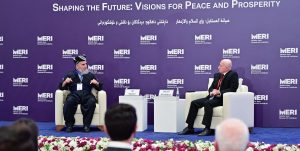
Opposition as a Measure of Political Health
Opening the discussion, Ala’Aldeen emphasized the importance of hearing from local political leaders who represent the diversity of voices in the Kurdistan Region and beyond. He framed the conversation around a central question: why has the opposition, despite its historical prominence, failed to evolve into a credible alternative to the ruling parties?
In his remarks, Ali Bapir underscored that the existence of an opposition is essential for any functioning political system. A society without criticism, he argued, is either “dead or suppressed.” For him, the very presence of an opposition, however fragmented, represents political vitality and democratic potential. “Without opposition,” he said, “any community or political entity would be considered deficient or unhealthy.” Reaffirming Komal’s position as a principled political party that commends sound policies and critiques shortcomings, Ali Bapir recalled earlier initiatives that reflected constructive collaboration between government and opposition, particularly the capacity-building programme for non-partisan scholars launched under a previous KRG cabinet.
Reflecting on governance in the KRI, Bapir argued that political parties have eclipsed the formal institutions of government. “Parties are stronger than the government,” he stated, “and they engulf the smaller ones.” He described a political environment where Parliament has been rendered ineffective, with limited sessions and an inability to form a new government months after elections. In his view, all three branches of governance-the executive, legislative, and judiciary- are under the dominance of partisan interests. This, he warned, places the entire political system in an “unhealthy” state and leaves little room for a functional or independent opposition.
Ala’Aldeen agreed that the relationship between parties and institutions remains at the core of governance challenges, but pressed further on the internal dynamics of opposition movements. Despite widespread public dissatisfaction with the government, opposition parties have not been able to harness popular frustration or present themselves as a coherent alternative. The collapse of movements such as Gorran (the Change Movement) and the emergence of newer political actors, he noted, have failed to translate into sustained opposition strength.
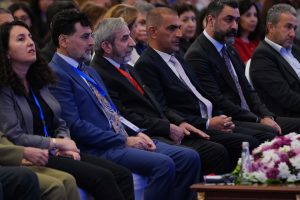
Fragmentation, Co-optation, and External Interference
In response, Bapir offered a candid self-critique. He acknowledged that part of the problem lies within the opposition itself: fragmentation, lack of unified vision, and the existence of what he described as “staged” opposition parties. “Some of them are like a kite,” he said metaphorically, “flown when they are needed to fly, and landed when they are told to land.” He argued that some opposition groups have become insular, unwilling to reach out to broader society, and resistant to collective action. Efforts to form a unified opposition bloc especially in Kirkuk and the disputed territories, he noted, had repeatedly failed due to political hesitation and competing interests among parties.
He further attributed the weakness of the opposition to external interference. Regional powers, particularly Turkey and Iran, he argued, support political parties geographically close to them to serve their own economic and security interests. The international community, too, he suggested, bears some responsibility for reinforcing the status quo. He recalled a meeting with U.S. officials in which he questioned why Western actors were reluctant to support genuine political reform in Kurdistan, asking rhetorically, “why do you not want us to be like you?”
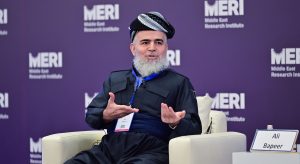
Accountability, Integrity, and the Limits of Reform
When asked whether the opposition could genuinely distinguish itself from the ruling elites, given that many of its members, including the Komal, had at times participated in government, Bapir defended his party’s record of integrity. He cited examples of Komal members who faced persecution for exposing corruption or criticizing the government, including MPs stripped of immunity and leaders subjected to arrest warrants. “We have been honest with ourselves and our people,” he said. “We have paid a heavy price for that honesty.”
He argued that opposition is not confined to formal political parties, but extends to all citizens, intellectuals, journalists, writers, and activists, who challenge injustice. For him, moral consistency and truthfulness before God and the people are what sustain legitimate opposition. He praised late Gorran leader Nawsherwan Mustafa as a model of principled leadership, lamenting that his successors failed to uphold his reformist vision.
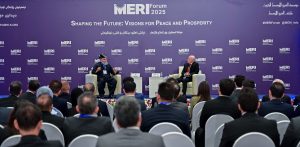
Withdrawal from the Political Process
Explaining his party’s recent withdrawal from the Kurdistan Parliament, Bapir maintained that the decision stemmed from a conviction that the electoral process had been manipulated. According to him, Komal’s parliamentary representation was deliberately reduced from seven seats to three through irregularities in vote counting. “We will not stand behind any injustice,” he declared, describing withdrawal as an act of protest and moral duty.
He recalled that the party had also previously withdrawn from government participation despite its ministerial achievements, in solidarity with public protests over salary cuts. For Bapir, political legitimacy should be grounded in public satisfaction, not in holding office. Nevertheless, he confirmed that Komal intends to participate in upcoming federal elections in Baghdad, provided the process is transparent and fair. “If we find that the elections are designed or manipulated,” he cautioned, “we will withdraw again, even at the last minute.”
The discussion between Dlawer Ala’Aldeen and Ali Bapir revealed the structural tensions between government, parties, and opposition that continue to define the Kurdistan Region’s political landscape. Bapir’s reflections combined sharp critique with introspection, emphasizing that the weakness of the opposition stems not only from external constraints but also from internal fragmentation and lack of vision. His call for honesty, accountability, and unity underscored the urgent need for reform, both within the ruling parties and among those who seek to challenge them.
The Komal, founded in the early 2000s, is an Islamic-oriented political party that has played an active role within the Kurdistan Region’s political landscape. It positions itself as a reformist movement advocating good governance, social justice, and accountability, and has alternated between participation in government and a principled opposition role in both the regional and federal political arenas.
MERI Forum 2025
The Role and Challenges of Political Opposition in the Kurdistan Region of Iraq