


Introduction: Two Decades after 2003 – Still Defining the State
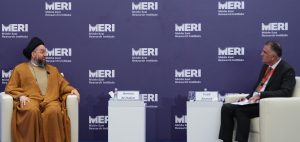
This panel brought together Ammar Al-Hakim, leader of the Al-Hikma Movement, in conversation with Fuad Ahmed, Head of the Kurdistan Parliament Research Centre, to reflect on Iraq’s journey of state-building. The discussion revisited the long arc of post-2003 transformations including security breakdowns, sectarian tensions, corruption, federal–regional disputes, and asked whether Iraq is still trapped in that early phase of turbulence or has finally moved into a qualitatively new stage.
From the outset, Al-Hakim framed 2003 as a structural, not merely political, transition: the shift from a totalitarian, one-party dictatorship to a pluralist, democratic system in a society that is deeply diverse in ethnicity, sect, religion, tribe and region. That kind of structural change, he argued, always requires time. The past twenty years have therefore been marked by overlapping security, political, social and economic crises, compounded by regional and international uncertainties about a new Iraqi system in the heart of the Middle East.
Despite this turbulence, Al-Hakim argued that the upcoming 2025 elections mark the beginning of a new phase. If the 2005 elections “founded democracy”, he suggested that the 2025 elections are meant to found “sustainable stability”. In his reading, recent years show the first signs of a transition from chronic instability toward more settled governance: greater political and social regularity, a faster pace of reconstruction and development compared with previous periods, and improved regional and international relations for Iraq, even under intense economic and geopolitical pressures.
Sovereignty and External Influence: A Stronger Centre, Less Intrusion
Responding to a question about whether Iraq has managed to balance its sovereign decision-making with regional and global partnerships, Al-Hakim offered a simple but telling principle: the stronger the state and its institutions, the weaker external interference becomes; the weaker and more fragile the state, the deeper foreign penetration will be.
Looking back to 2003, he acknowledged that Iraq experienced significant external interventions in its political process. Regional and international actors not only watched but sought to “enter into details”: advising, lobbying or pressuring political forces and encouraging particular positions. Over time, however, he believes this pattern has receded. Today, when Iraqi political forces sit together to draft electoral laws, negotiate alliances or define the next phase, he argued that they do so increasingly according to their own perceptions of interest rather than in response to foreign preferences.
Al-Hakim also suggested that external actors themselves have adjusted their approaches. Whereas some once sought to influence daily political details in Baghdad, their newer posture is more hands-off, showing greater respect for Iraqi agency. This does not mean that regional and international interests have disappeared, but that Iraq’s internal consolidation has gradually reduced the space for micro-management from outside. However, it could also be that the landscape has changed in ways where external influence has turned down in visibility, but not necessarily in strength. External influence could take routes behind closed doors rather than overt diktats, indicating a shift in engagement, not disengagement.
Internal Power, Non-State Actors and Gradual Integration
As the discussion continued, Fuad raised a sensitive and recurring theme: the existence of internal forces “outside the control of the state” that are frequently mentioned by media and international observers as obstacles to unified decision-making. Al-Hakim did not deny their presence, but emphasized that even these actors are increasingly being pulled into the formal political and economic system.
He noted that many of the groups once described as “outside the state” now participate in elections, appear on formal lists, have party structures and economic interests. Precisely because they have something to protect, political representation, economic stakes, local influence, they are gradually incentivised to align themselves with the emerging institutional order and legal frameworks. In his view, the trend line is positive: more integration, more convergence with the state-building project, and a greater willingness to operate through official channels. Yet, Al-Hakim’s view of this trajectory could be of a functional integration, it perhaps overestimates how much that translates into normative commitment to the rule of law.
Federalism, the Constitution and the Need for a Mature Reading
The discussion then turned to Iraq’s federal system and the constitution as the foundational social contract. Fuad pointed out that Iraq has rigorously adhered to electoral timelines, the sixth parliamentary term held on schedule, yet has fallen short in fully implementing many constitutional provisions, particularly those shaping centre–region relations and federal institutions such as the Federation Council.
Al-Hakim described the constitution as a social contract that embodies the will, interests and orientations of Iraqis at a particular historical moment. Over the last twenty years, he argued, each side has tended to focus on the articles that guarantee its rights, while neglecting those that impose obligations toward others. Kurds, Arabs, Sunnis, Shias, and other components each highlight selected constitutional clauses, often ignoring the reciprocal duties embedded in other provisions.
For him, the first requirement is to accept the constitution as an indivisible whole, “all that it contains of ‘for us’ and ‘upon us’”, and to deal with it as a complete and binding contract, not a menu to be selectively ordered from. At the same time, he acknowledged that after more than two decades, in a context of relative security, political and psychological stability, it is legitimate to review the constitution: to ask whether what was written in the fearful atmosphere of dictatorship’s collapse still fully serves Iraq’s current needs.
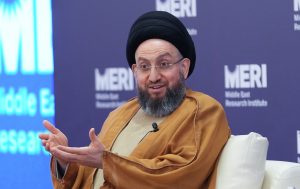
He argued that mature democracies periodically revisit their constitutions, and Iraq should not be an exception, provided such revision happens in conditions of stability and broad consensus. In parallel, he identified several strategic laws requiring a two-thirds majority, the Federation Council Law, the Federal Supreme Court Law, and the Oil and Gas Law, as key instruments for clarifying the architecture of the state and its federal relationships. He suggested that the next parliamentary cycle, after the 2025 elections, could be an important window for agreement on these long-delayed frameworks and for solidifying institutional arrangements acceptable to all components. It remains to be seen whether progress will be made in the coming cycle, and even then, the political economy of who gains and who loses from enforcement versus amendment is going to be a defining factor in the process.
Baghdad–Erbil Relations, Revenue Sharing and the “Salary Question”
On the specific issue of the Kurdistan Region and revenue distribution, Al-Hakim underlined that 94% of Iraq’s budget is derived from oil revenues. For such a rentier system to serve all citizens fairly, all oil income, wherever produced, must be pooled into a single national “basket” and then redistributed according to population shares and agreed formulas.
He clarified a recurring misunderstanding: federally, there is no line item called “Kurdistan Region employees’ salaries” in the constitution, nor in the Ministry of Finance. For the fifteen non-regional governorates, the ministry deals directly with named employees and transfers salaries to individual accounts. With Kurdistan, by contrast, the federal government deals with a negotiated percentage of the overall budget of the region, which is then transferred to the Kurdistan Regional Government (KRG), and it is the KRG that allocates this share to salaries, services and investment according to its own internal mechanisms.
When the Kurdistan Region of Iraq (KRI) began independently producing and exporting oil, disputes arose over how to reconcile its exports with its share of the national budget. Baghdad argued that all oil revenues should enter the national basket and be accounted for when calculating KRI’s share. The KRG, for its part, pointed to its own fiscal pressures and logic. These conflicting narratives left the ordinary KRG employees feeling caught in the middle, understandably insisting: “I have nothing to do with these details; I just want my salary.”
Al-Hakim saw the recent federal–KRG oil agreement as a turning point that can finally “put an end to a long-running problem” and create a framework for deeper understanding between Baghdad and Erbil. Once all KRG oil is pumped through federal pipelines and sold via SOMO, revenues flow directly into the national basket and can be redistributed in a more transparent and predictable way. He believes this agreement not only unlocks the Oil and Gas Law but also opens doors to resolving other outstanding issues between the federal and regional governments. It is true that this agreement may clarify how revenues should be pooled and redistributed, it does not by itself eliminate political mistrust and temptation to re-use budgetary provisions as political pressure cards in the future. Past experience show that even clear formulas have been suspended when politics dictated. For any provision to work, both sides must trust each other a clear robust auditing and monitoring mechanism may be needed to operationlise trust.
Importantly, he urged a distinction between “ikhtilāf” (disagreement) and “khilāf” (difference). Disagreements between a federal government and a region are normal and even healthy in federations; they should be managed through dialogue and recourse to judicial institutions, not by cutting salaries or inflicting harm on citizens. The aim is sustained dialogue, legal arbitration and non-escalation, so that political disputes do not translate into social hardship and differences.
Corruption and Anti-Corruption: From Chasing Files to Structural Prevention
On the question of corruption which was identified as one of the core obstacles to state-building since 2003, Al-Hakim insisted that true anti-corruption work is structural, not anecdotal. It is not enough to arrest individuals after complaints; the system itself must be redesigned to make theft of public money difficult.
He illustrated this with a simple analogy: if a gold item is placed openly “within reach”, and someone steals it, the primary blame lies with whoever left it exposed rather than in a safe. In well-run systems, people buy safes, lockboxes and secure processes to protect valuables. By extension, Iraqi governance must be rebuilt with “institutional safes”: transparency, clear procedures, and minimal discretionary power.
He identified bureaucracy, “dark corridors”, and complicated, opaque procedures as fertile soil for corruption. If an investor must secure dozens or hundreds of signatures from multiple agencies, each gatekeeper has leverage to delay, extort or bargain. The response, in his view, is to introduce e-government, digitalization, and one-stop windows for services and investment, making processes visible, traceable and less vulnerable to manipulation.
Al-Hakim recalled a meeting with a former head of the Integrity Commission who proudly reported processing over 30,000 cases in a single year. His reaction was blunt: this volume indicated the wrong approach. Tens of thousands of small files suggested a focus on minor infractions while leaving structural, large-scale corruption intact. It would be more meaningful, he argued, to address 10, 50 or 100 major systemic cases whose resolution would, in turn, eliminate tens of thousands of smaller ones. Without “benyawi” (structural) and “jithri” (root-level) reforms through technology and procedural redesign, anti-corruption efforts risk remaining reactive and piecemeal.
To his credit, Al-Hakim frames corruption as a governance design problem, not merely a moral failing of individuals. The missing piece is a clearer acknowledgement that design is itself shaped by entrenched interests that will resist change. In many contexts, digital platforms and ‘one-stop-shops’ have been introduced only to find that corruption is displaced rather than reduced or eliminated. Without independent judiciary, protected oversight bodies, and constraints on party financing, digital tools risk being over-sold. Additionally, it is true that procedural complexity enables corruption and sketchy deals, but complexity is sometimes created and maintained deliberately by actors who benefit from it. It is therefore important not only to confront ‘paths in the dark’ but also those who built these paths and thrive on them.
2025 Elections: A Critical Crossroads and the Politics of Behaviour
The conversation returned to the 2025 elections and their significance. Al-Hakim described Iraq as standing at a crossroads. The country has achieved important gains such as relative security, institutional continuity, and better external relations, but still faces a long path ahead. The task now is not to squander these gains but to build on them and maintain an upward trajectory toward sustainable stability.
For him, this makes the upcoming elections especially consequential. Yet their impact depends not only on results but also on how the campaign is conducted. He rejected the notion that “anything goes” in politics: the ethics of competition, the “honour of contestation” and the values governing media and political behaviour, are all important matters. Political leaders must remember that the day after voting, they will still need to sit together and form a government to serve Iraqis for the next four years. Election day is not the “end of history”, but the beginning of a new phase.
Al-Hakim suggested that one indicator of Iraq’s institutional recovery will be the speed with which a government is formed after the vote. Previous cycles sometimes required eight to ten months. If, after 2025, a government can be formed within three or four months through relatively smooth negotiations, this would be a meaningful sign of political maturation. Every extra month consumed in post-electoral bargaining is, in his view, a month of disputes, jockeying and delayed service delivery. Despite the challenges, Al-Hakim expressed cautious optimism that these elections can reinforce stability and help Iraq step into the new stage he described at the beginning of the conversation.
Regions, Sectarian Federalism and the Question of a “Shia Region”
During the Q&A, a student asked whether, given perceived US and Israeli threats against the Popular Mobilisation Forces (PMF), the creation of a Shia region on the model of the Kurdistan Region might better protect Shia interests and institutionalize the PMF.
Al-Hakim firmly rejected the idea of sectarian or ethnic regions. The constitutionally available instrument of regionalization, he insisted, is administrative and territorial, not sectarian. Any new region must be based on governorates’ will and administrative logic, not on identity. He recalled that earlier in the post-2003 period, Al-Hikma and allied forces had promoted the idea of regions, but under very different domestic and regional conditions. Today, given accumulated complications and regional instability, pushing for new regions would be hasty, in his reading. But even without formal sectarian regions, Iraq already exhibits strong territorialisation of identity and armed control. Arguing against sectarian regions on paper does not in itself address the entrenched de facto fiefdoms controlled by different parties and armed networks.
Instead, he now favours strengthening the governorate system and deepening administrative decentralization, while maintaining the Kurdistan Region as an existing constitutional reality. The option of forming new regions remains in the constitution and can be revisited “when conditions are calm and become more orderly”, but he does not see the present moment as appropriate.
A New Social and Political Contract: From Components to Citizenship
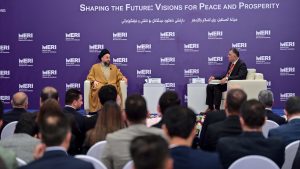
In response to a cluster of questions about electoral manipulation, his previous call for a new social contract, and the evolution from a “state of components” to a “state of citizenship”, Al-Hakim clarified several points. First, on election integrity, he argued that precisely because the 2025 elections are pivotal and ‘determinative’, all steps must be under scrutiny to ensure that fraud is minimised and all actors have a fair chance. The current electoral law has already been used in two rounds, provincial council elections and the Kurdistan parliamentary elections, with relatively low levels of manipulation, and most political forces accepted the results. If the 2025 elections proceed similarly, this would validate the law and the choice of parliamentary blocs that supported it. However, the election law has been changed numerously prompted by the will of the large ruling parties. There is not guarantee that this too will not be amended in future elections.
Second, he reaffirmed his advocacy for a new political and social contract, built on a careful review of the constitution and its alignment with Iraq’s evolving realities. However, he insisted that any such contract must emerge through consensus, not domination. A social contract imposed by one side, or passed by breaking another, is by definition not social. The current constitution itself was built on an inclusive formula: two-thirds of three governorates could have blocked it, yet did not. Interestingly, he noted, the Sunni Arab community, initially skeptical or influenced by calls to boycott, is today often more attached to the constitution than some of those who helped draft it, which he read as evidence that the drafters did consider their partners’ rights.
Third, on moving from a “state of components” to a “state of citizenship”, he reiterated a vision he has articulated since 2016. Given Iraq’s realities, he does not expect to suddenly see two large, nationwide parties that fully transcend identity. But he considers it realistic to work toward two “vertical” coalitions stretching from north to south, each containing parties and figures that represent all components. These two national blocs would then compete electorally. Whichever obtains a simple majority would form the government, but that coalition would already include Kurds, Sunnis, Shias and others. The minority coalition would lead the opposition, also representing all components. In such a system, every community would be present in both government and opposition, and no group would feel entirely excluded.
He suggested that Iraq is slowly moving in this direction. Earlier, alignments were clearly component-based: a unified Kurdish alliance, a Sunni front, and a Shia bloc. Today, there are visible intra-Shia, intra-Sunni and intra-Kurdish divergences, indicating a shift from identity-based cleavage to political and programmatic disagreements. This evolution, in his view, lays the groundwork for future cross-component coalitions that center citizenship and policy over sect or ethnicity.
Conclusion: A Difficult but Forward-Moving Trajectory
The discussion with Ammar Al-Hakim portrays an Iraq that is neither at the beginning of its post-2003 turmoil nor fully out of the woods. The country has survived existential wars, terrorism and institutional breakdown; it now exhibits continued electoral regularity, a higher degree of internal decision-making autonomy, cautious improvements in Baghdad–Erbil relations and a growing recognition that corruption must be addressed structurally, not just punitively.
At the same time, Iraq still grapples with incomplete constitutional implementation, unresolved federal frameworks, entrenched rentier dynamics, and the tension between identity-based politics and the aspiration for a citizenship-based state. The 2025 elections stand, in Al-Hakim’s narrative, as a pivotal moment: an opportunity either to consolidate a trajectory toward “sustainable stability” or to squander hard-won gains.
The path he sketches is incremental but clear: treat the constitution as a whole, then calmly review it; pass the strategic laws that define federal institutions; use the new Baghdad–Erbil oil arrangement to stabilise revenue sharing; combat corruption through transparency and e-governance; uphold pluralist democracy against any authoritarian temptation; and slowly build the vertical, cross-component coalitions needed for a genuine ‘state of citizenship’ in which all Iraqis, regardless of identity, see themselves reflected in both government and opposition, and in the institutions of the state that serves them.
From the outset, Al-Hakim framed 2003 as a structural, not merely political, transition: the shift from a totalitarian, one-party dictatorship to a pluralist, democratic system in a society that is deeply diverse in ethnicity, sect, religion, tribe and region. That kind of structural change, he argued, always requires time. The past twenty years have therefore been marked by overlapping security, political, social and economic crises, compounded by regional and international uncertainties about a new Iraqi system in the heart of the Middle East.
MERI Forum 2025
The Challenge of State-Building amidst Complex Political Dynamics B