


The Netherlands, Iraq, and the Kurdistan Region: Strategic Partnership Amidst Regional Uncertainty
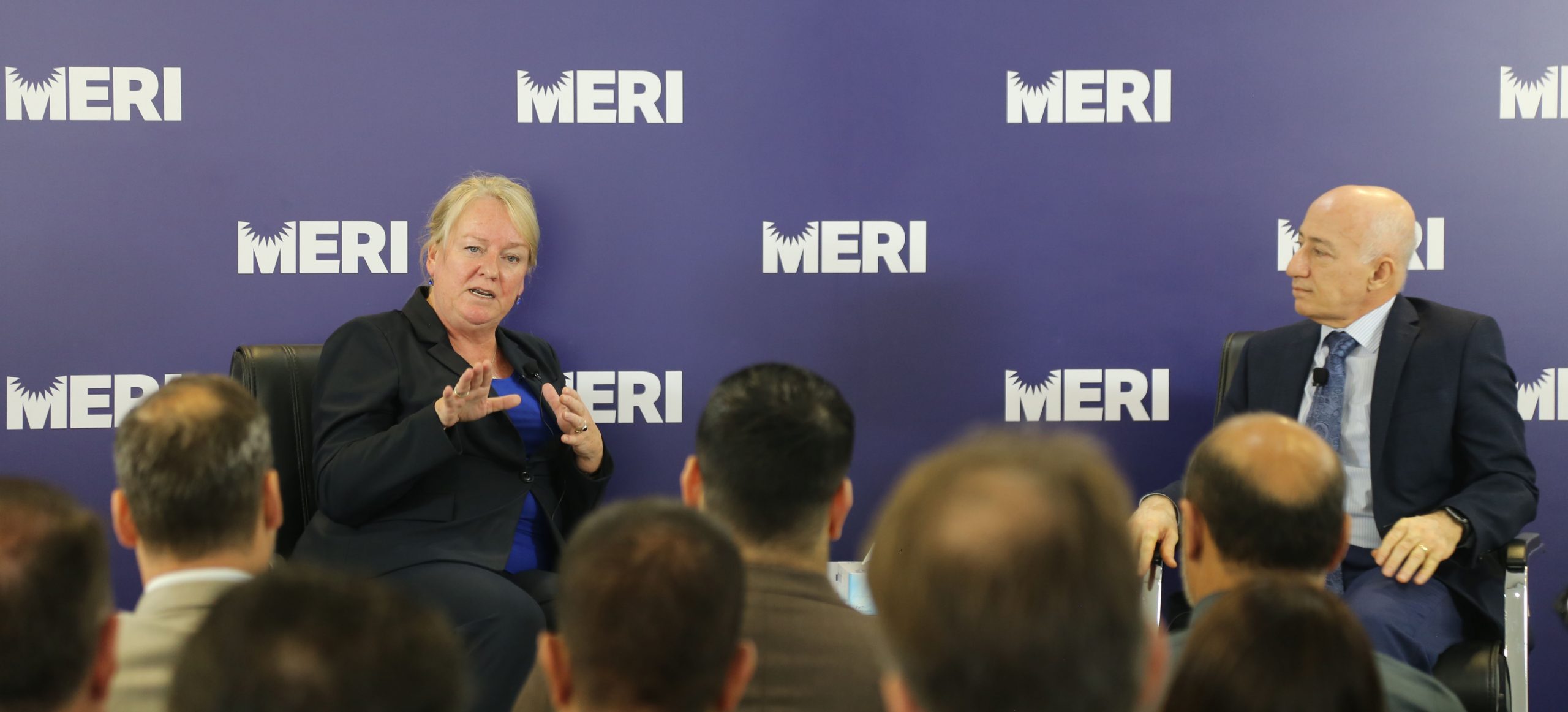
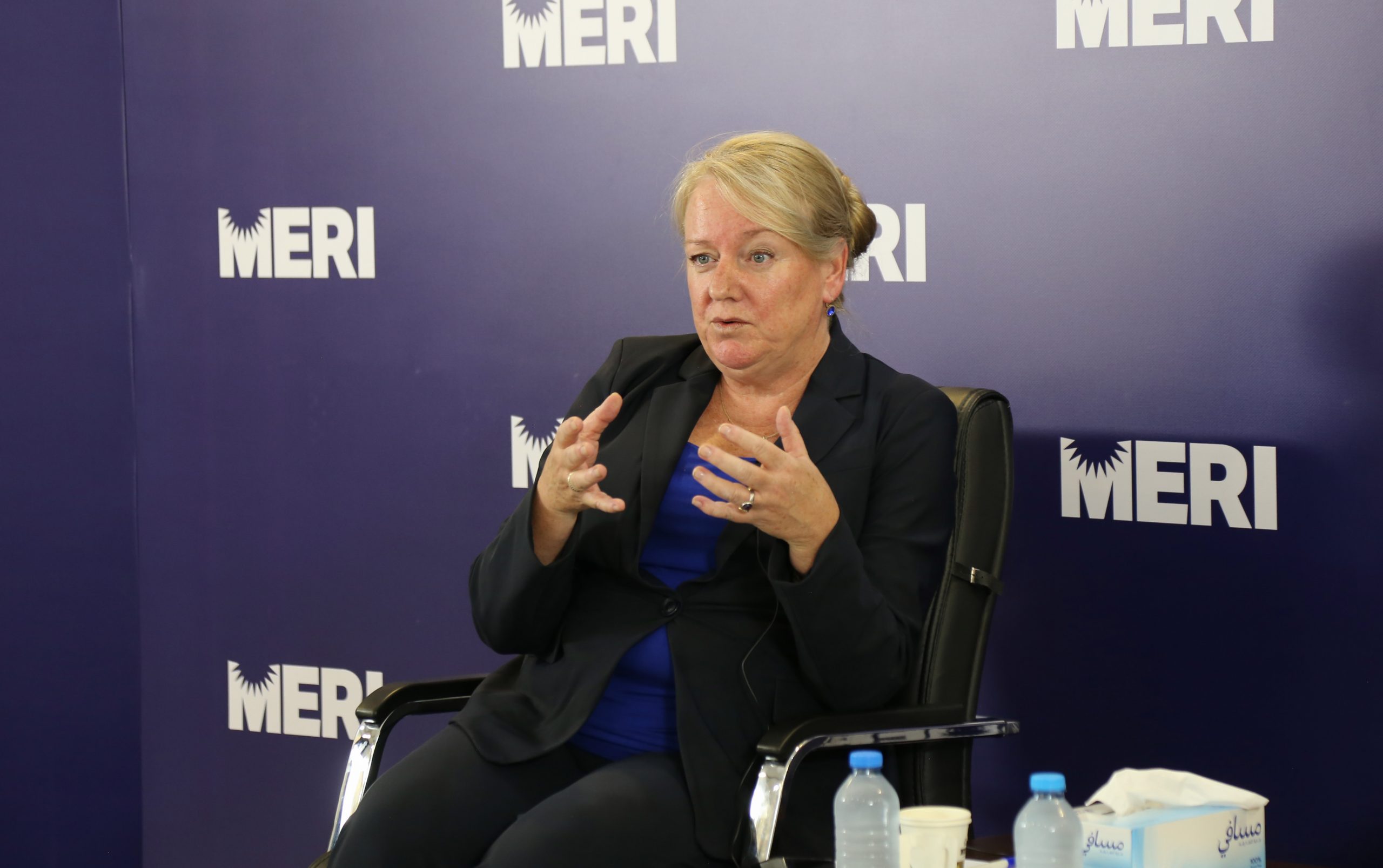
The Middle East Research Institute (MERI) hosted a highly engaging policy discussion with Janet Alberda, the Netherlands’ Ambassador to Iraq, marking the conclusion of her two-year tenure in Baghdad. Ambassador Alberda is no stranger to MERI, having previously served as Consul General in Erbil (2016–2018), making this discussion a continuation of a long-standing relationship with the Institute.
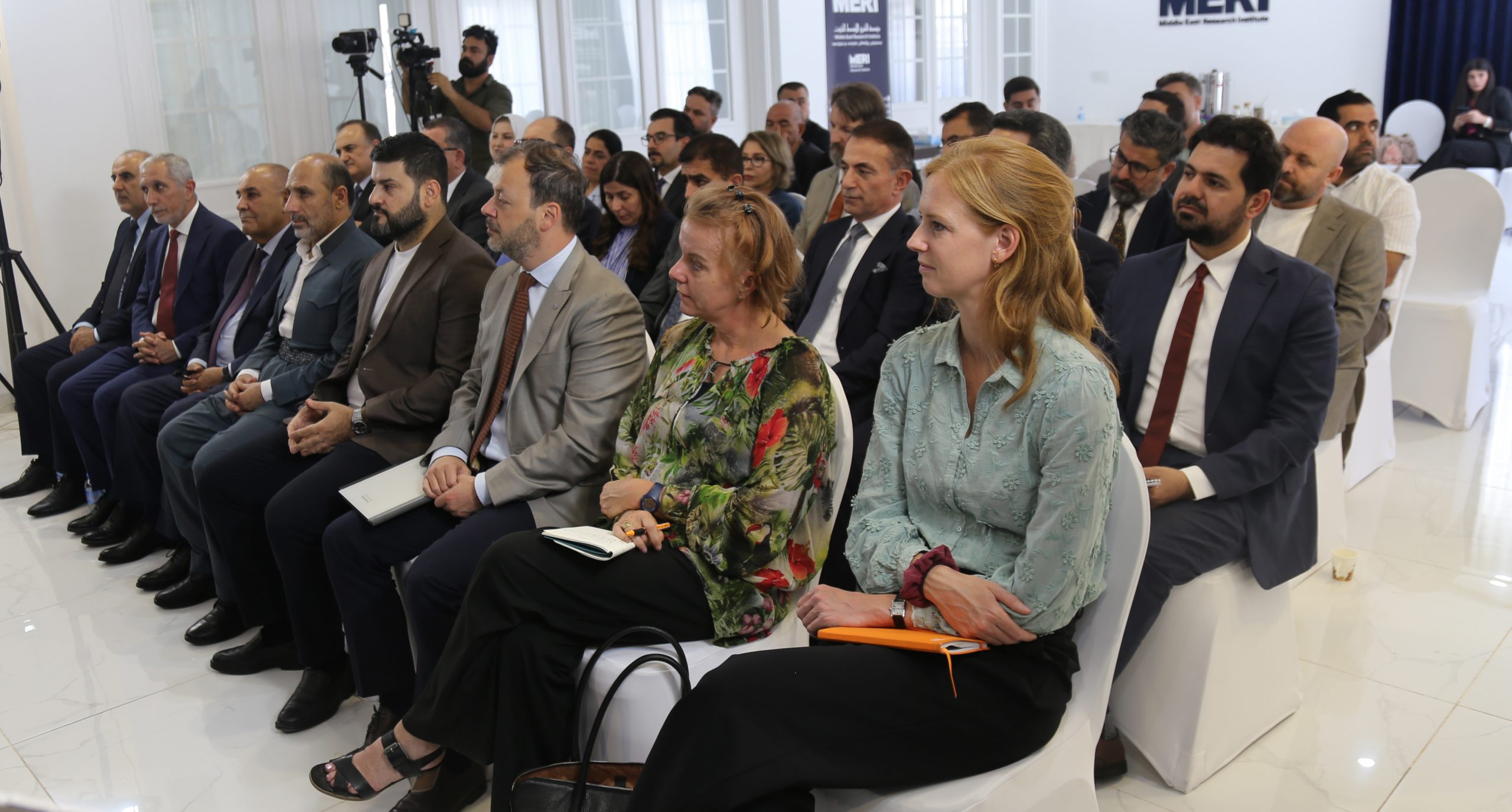
The event brought together a select group of senior officials, policy experts, civil society representatives, and practitioners for a candid exchange on Iraq’s most pressing policy challenges. The discussion, partly conducted under the Chatham House Rule*, covered a broad range of strategic issues relating to the Netherland’s and EU policy in Iraq and Kurdistan Region in the fields of security, economy, migration, human rights and the regional implications of the evolving tensions between the United States and Iran.
Erbil-Baghdad Inching Forward
On Baghdad-Erbil relations, the Ambassador observed that “the same issues are still on the table since 2016,” including oil, salaries, revenues, Article 140, and displacement. “Iraq is one country and that both Baghdad and Erbil must make the federal system function”, she added.
For the Kurdistan Region, this requires a functioning government and parliament. The KRI frequently presents itself as a stable and pro-Western partner, but prolonged institutional paralysis undermines its credibility, negotiating position, and ability to attract sustained international support. Institutional functionality is therefore not only a domestic requirement; it is also a source of diplomatic capital.
Baghdad must likewise assume greater responsibility for displacement, social protection, reconstruction, and the implementation of the Sinjar Agreement, among other challenges. Iraq is “not a poor country” and cannot continue relying indefinitely on international donors to resolve its domestic crises. The principal problem is not simply a lack of resources, but weak prioritization, poor coordination, and limited accountability.
For Erbil-Baghdad relations to improve, some participants argued that Kurdistan leaders should spend more time in Baghdad and engage continuously with federal politics. The KRI’s influence depends on sustained presence, preparation, unity, and professional negotiation. Episodic crisis bargaining is no longer sufficient; the KRI requires a permanent federal strategy.
The political fragmentation between the ruling parties of the KRI and their weakness in Baghdad attracted much debate. While external mediation was raised as a possible solution for the current political deadlock in Kurdistan, the dispute was seen as deeply entrenched. External mediation can contribute only if it focuses on institutional guarantees rather than personal reconciliation. Sustainable progress requires rules governing revenue, security, administration, and decision-making.
Sinjar and the Unfinished Post-ISIS Transition
Sinjar emerged as one of the clearest examples of Iraq’s incomplete transition from conflict. Continued displacement from Sinjar, contested authority, the presence of armed actors, and the failure to implement the Sinjar Agreement have made prospects for sustainable return increasingly bleak.
Reconstruction alone cannot resolve Sinjar’s crisis. Return is not merely a matter of rebuilding houses, roads, and public services; it also requires security, legitimate administration, justice, reparations, land rights, dignity, and confidence in the future. Reconstruction conducted without an agreed political and security framework may reinforce the power of armed actors rather than benefit displaced communities.
The discussion also addressed the return and reintegration of Iraqis from Al-Hol and other camps in Northeast Syria. Although repatriation is necessary from legal and security perspectives, some Yazidi survivors perceive that individuals and families associated with the ISIS period receive more structured support than victims of ISIS atrocities. Whether fully accurate or not, this perception is politically consequential. Reintegration policies must therefore be accompanied by visible, survivor-centered justice, compensation, and reparations to prevent further deterioration in social trust.
Civil Society, Women, and Institutional Reform
Amb. Alberda expressed concern that civic space had not significantly improved over the past decade in Iraq and that women had become less visible in public and security-related decision-making. Iraq had previously been praised for adopting a national action plan under UN Security Council Resolution 1325, yet formal commitments have not translated into meaningful inclusion. In contrast, in the Kingdom of Saudi Arabia, where the Ambassador served four years, women were becoming increasingly visible in public delegations and national initiatives.
The importance of this comparison lies in exposing the gap between Iraq’s formal strategies and women’s actual influence. The Kurdistan Region performs somewhat better, but it too requires greater progress. Across Iraq, women remain underrepresented in substantive decision-making, while civil society organisations face legal uncertainty, shrinking space, and occasional intimidation.
Security Transition and European Engagement
The anticipated change in US forces presence in Iraq raises questions about the future of Iraq’s security partnerships with other European powers. The Ambassador distinguished between the international coalition’s original counter-ISIS mission and NATO’s advisory role, which focuses more on institutional development. She presented the Dutch 3D-approach, combining “defence, diplomacy, and development,” while noting that the defense component may become less prominent.
This does not mean that Iraq’s security challenges have ended. It is true that ISIS no longer controls significant territory, but state authority remains challenged by armed groups, politicized institutions, and fragmented command structures. The next phase requires security sector reform, civilian oversight, community policing, accountable institutions, and the gradual consolidation of weapons under state authority.
European engagement was discussed with both appreciation and frustration. The Netherlands and other European states have contributed greatly to humanitarian assistance, agriculture, entrepreneurship, migration management, human rights, community policing, countering IS, and security reform in Iraq. However, Europe’s contribution often remains less visible because assistance is fragmented among member states or channeled through multilateral organizations.
As Iraq enters a post-coalition period, Europe must move beyond technical projects and develop a clearer political profile. This may require stronger coordination, more visible high-level engagement, and a clearer articulation of Europe’s contribution to rule of law, economic diversification, climate adaptation, institutional reform, human rights, and balanced diplomacy.
Migration and the Crisis of Hope
Migration is not only a European policy concern, but is also a symptom of Iraq’s governance crisis. The Ambassador noted that Iraq remains a priority country for European return policies, while emphasizing the need to address the root causes of migration. She observed that many Iraqis migrating to Europe do not necessarily come from the poorest areas of southern Iraq, but from the Kurdistan Region, including Ranya and Zakho. The principal driver, she suggested, may not be poverty alone but a sense of “hopelessness.”
Migration from the Kurdistan Region is often financed by families capable of paying smugglers, indicating a deeper crisis of confidence. Many young people do not see credible opportunities in education, employment, political participation, or public institutions. Reducing irregular migration therefore requires more than awareness campaigns and return agreements. It requires transparent recruitment, fair economic opportunities, accountable governance, protection of rights, and political leadership capable of convincing young people that they have a future at home.
Climate Change and Regional Instability
Climate change is not merely an environmental issue; it affects migration, food security, agriculture, public health, interprovincial relations, and urban the overall stability. Drought, pollution, extreme temperatures, and environmental degradation are major long-term threats that may drive internal displacement from southern and central Iraq towards other areas, including the Kurdistan Region.
The Ambassador acknowledged that water management was an area where Dutch engagement could have played a stronger role, while stressing the need for Iraq to prioritize climate policy, pollution control, urban planning, agriculture, and youth employment. Effective policy requires federal-regional coordination, agricultural reform, improved water management, and sustained diplomacy with upstream countries.
The wider regional environment further complicates Iraq’s position. Participants discussed the risks associated with U.S.–Iran tensions, possible disruption to the Strait of Hormuz, and the consequences for energy, trade, food security, and navigation. The Ambassador noted that Iraq had managed to avoid deeper involvement in recent escalation better than expected, but warned that any closure of Hormuz would have severe consequences.
From Crisis Management to Institutional Consolidation
The dialogue showed that Iraq and the Kurdistan Region stand between two phases. The immediate emergency of ISIS has passed, but the institutional phase of recovery remains incomplete. Security has improved, but governance has not kept pace. International partners remain committed, but their engagement is fragmented. Citizens have endured repeated crises, but many still lack confidence in the future.
For Baghdad, the principal message is to assume responsibility for national problems that have long been outsourced to donors in the likes of UN agencies or subnational authorities. These include displacement, Sinjar, climate adaptation, public services, social protection, and security sector reform. For the KRG, the priority is to restore institutional functionality, rebuild public confidence, overcome party fragmentation, and engage Baghdad with greater unity and professionalism. For European partners, the challenge is to remain engaged beyond the coalition transition while becoming more visible, strategic, and politically coherent.
Iraq’s central challenge is therefore not simply how to survive the next crisis, but whether it can build institutions strong enough to prevent recurring crises from defining its future. The country does not lack diagnosis; it lacks implementation, accountability, and leadership focused on citizens’ long-term interests.
Event date: 15 July 2026
Except for the Ambassador’s quotations, stated during the open session, all other statements are unattributed and should not be affiliated to any participant.
* * *
About MERI
The Middle East Research Institute (MERI) is internationally ranked as Iraq’s leading think tank and policy research institute. As an independent, non-profit, grant-funded organisation, MERI advances evidence-based policymaking, democratic governance, and sustainable development through research, policy analysis, dialogue, and public engagement. MERI’s research focuses on Iraq, the Levant and the wider Middle East, covering governance, state-building, foreign policy, regional security, post-conflict recovery, violent extremism, displacement, minority rights, women’s rights, civil society, Baghdad–Erbil relations, and broader geopolitical developments. Through its publications, policy dialogues, and the annual MERI Forum, MERI brings together policymakers, diplomats, academics, and civil society leaders to promote informed debate and practical policy solutions for the region’s most pressing challenges.